Well Pump Problems and Troubleshooting
What Causes Air or Sputtering at the Faucets?
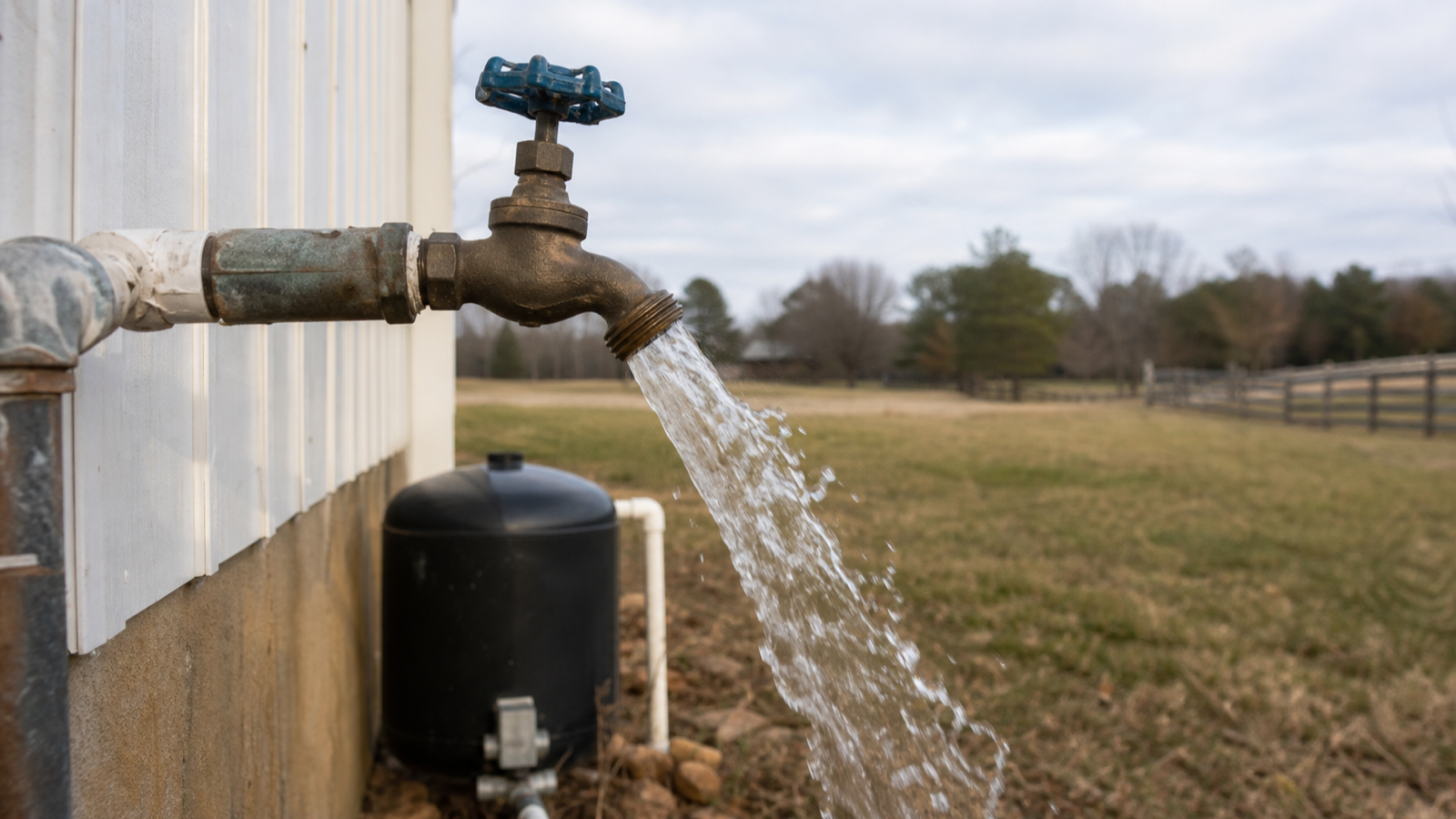
When faucets on a well system spit, sputter, or spray air along with water, it means air is getting into a system that should be full of water. It's not just a quirk — it points to something drawing air in, and some causes matter more than others. This guide explains what sputtering faucets can indicate on a private well.
It's worth separating a one-time burst of air — the kind you might see right after service or after the water was off — from sputtering that keeps happening or steadily gets worse. The occasional burst often clears on its own as the lines refill. Persistent sputtering, especially alongside weaker water or pressure, is the pattern that tends to point at something in the well or the pump, and that's the one worth taking seriously.
Air Where There Should Only Be Water
In a healthy well system, the lines from the pump to your fixtures stay full of water under pressure. Sputtering means air has entered somewhere — and the pattern (occasional bursts, worsening over time, or constant) is a clue. Because air can enter from the well, the pump, or the plumbing, the location matters, and some sources are more serious than others.
Which fixtures sputter is also informative. If every tap in the house spits air, the source is likely upstream — the well, the pump, or the main line — because the problem is shared by the whole system. If only one faucet does it, the cause may be closer to that fixture. A safe note of where and when it happens gives a provider a meaningful starting point before anyone inspects the equipment.
Common Causes
- A dropping well level — if the water level nears the pump, it can draw in air along with water (a common and important cause).
- A failing well pump or worn components allowing air in.
- A leak on the suction side of a jet pump — surface pumps can pull air through a leak.
- A waterlogged pressure tank in some cases affecting delivery.
- Air in the lines after service or a recent event, which may clear or may signal an issue.
Why the Well Level Matters Most
One cause deserves attention: if the well's water level has dropped close to the pump — from a dry spell, heavy use, or a well that's declining — the pump can start pulling in air. That's the well telling you it's struggling to supply the demand, and continuing to run the pump in that state can risk it. Our guide on well yield versus pump capacity covers this relationship. Sputtering that comes with reduced water is worth prompt evaluation.
A common giveaway is timing: sputtering that appears during or after heavy household use — laundry, irrigation, several fixtures at once — and eases when demand drops often reflects the well being drawn down faster than it can recover. In a region like the Upper Cumberland, seasonal dry spells can lower water tables enough to bring this on in wells that were fine the rest of the year. Easing back on heavy use while you arrange service can reduce the strain on the pump.
What to Do
Note the pattern — when it started, whether it's getting worse, and whether it comes with low water or pressure. Reducing heavy water use can help if a dropping well is suspected. Because the causes range from a declining well to a pump or plumbing issue, request service for a diagnosis rather than guessing. Persistent sputtering, especially with reduced water, shouldn't be ignored. Don't open the well or pump components to investigate.
Related Well Pump Services
Upper Cumberland Well Pump is an independent referral service that helps connect property owners with local water-well and pump-service providers. Upper Cumberland Well Pump does not directly perform regulated well drilling, pump installation, pump repair or water-treatment work unless expressly stated. Provider licensing, qualifications, insurance, availability, pricing, scheduling and service terms must be confirmed directly with the provider.
Well Pump Problems and Troubleshooting — Questions
Why are my faucets sputtering air on a well system?
Because air is entering lines that should be full of water — commonly from a well level that has dropped near the pump, a failing pump, or (on jet pumps) a suction-side leak drawing air in. The pattern and whether water is also reduced help point to the cause.
Does sputtering mean my well is running low?
It can — if the water level drops close to the pump, it may pull in air along with water, causing sputtering. That's an important cause because running the pump while the well is low can risk the pump. If sputtering comes with reduced water, have it evaluated promptly.
Is air in the water dangerous?
The air itself is usually harmless, but it signals a problem worth diagnosing — a low well, a failing pump, or a leak — that can worsen or damage the pump if ignored. It's the underlying cause, not the air, that matters. A provider can identify it.
What should I do about sputtering faucets?
Note when it started, whether it's worsening, and whether water or pressure is also reduced; ease heavy water use if a low well is suspected; and request service. Don't open the well or pump to investigate — a licensed provider diagnoses the source of the air safely.
Need Help With a Well Pump Problem?
Send the property location, a description of the problem, any recent changes in pressure or water flow, the location of the well head and several clear photographs of the visible system components for an initial service review.